The Kingdom of Morocco
Experience unparalleled comfort, cutting-edge design, and performance-enhancing
technology with this latest innovation, crafted to elevate every athlete's journey.
A little history and geography of Morocco
With a red flag and a green star in the centre, symbolising the sacrifice of its people for the unification of its territory and the five pillars of Islam which symbolise the religion of the country and its majority inhabitants.
The presence of the Jewish religion in Morocco is very anchored in the memory and traditions of Moroccans. A good Jewish community still lives there, especially in the big cities, but the rural and mountain areas have known a Jewish presence for ages until the great forced migration of the 60s and 70s.
Morocco is the country of the setting sun or the "extreme setting", Morocco is the most western of North Africa and belongs to the Mediterranean, oceanic and Saharan world.
It is ethnically, linguistically and socially diverse, with a rich tradition.
Morocco is located between the 21st and 36th degree of North latitude and the 1st and 17th degree of West longitude.
The Moroccan coastline stretches for 3500 km along the Mediterranean and the Atlantic Ocean, with a large number of seaside resorts and beautiful golden beaches. Morocco is crossed by 4 mountain ranges:
The High Atlas, the Anti-Atlas, the Middle Atlas and the Rif, in addition to a 5th small chain little known to everyone which is Jbilet. The mountains cover 1/3 of Morocco's area and are home to about 1/3 of its population.
The High Atlas, which extends over 700 km in length from the Atlantic Ocean north of Agadir to the Algerian borders in the eastern part of the country. It divides the country into two contrasting parts, the humid and rainy North and the hot and dry South.
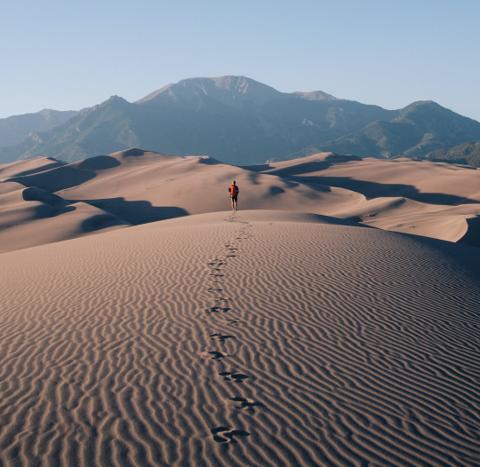
The desert covers 3/4 of the surface.
Its landscapes, as magnificent as they are varied, will seduce you:
- the charm of the narrow gorges ;
- the deep glacial valleys;
- the high plateaus of medium and high altitude;
- where fertile lands are hidden;
- the villages clinging to the mountain sides;
Gorges, waterfalls, beaches, desert and cities alternate with reddish-ochre ramparts and chiselled golden gates.
Morocco holds and embodies all the faces of a bewitching Orient:
Imperial cities, sumptuous Berber casbahs, the whole country is rich in contrasts
without forgetting the diversity of flavours that its gastronomy will reveal to you.
Morocco, a constitutional monarchy, is a North African country located in the northwest of Africa. It is bounded to the north by the Strait of Gibraltar and the Mediterranean Sea, to the south by Mauritania, to the east by Algeria and to the west by the Atlantic Ocean.
Climate
The dominant climate in Morocco is Mediterranean, tempered to the west and north by the Atlantic Ocean and the Mediterranean Sea.
In the interior, the climate is more continental with significant temperature variations.
The Atlas area is humid, with frequent snowfall, while the south has a desert climate.
The annual sunshine is more than eight hours per day in Agadir, Fez, Marrakech and Ouarzazate with an average temperature of 21°C.
You can go from the snow of the Atlas to the Sahara desert in the same day!
Administrative organisations
Morocco is divided into 12 regions, themselves subdivided into provinces and prefectures. Each region has the status of a local territorial authority, composed of urban and rural territorial Communes.
The administrative division is made up of provinces and prefectures, which are themselves subdivided into Cercles, divided into Caïdats.
The capital is the city of Rabat, where His Majesty the King and the Government officially sit.
Currency: Dirham
In 2022: 1 MAD = 0.10€ 1€ = 10.10 MAD (August 2022)
Area: 710. 850 km2
Religion: Islam
Moroccan Muslims belong to the Maliki branch, one of the four orthodox branches of Islam, the most moderate.
The religion is based on the holy book, the Koran, dictated by Allah to the prophet Mohamed, as well as the hadith, which are the directives and practices of the prophet.
The word Islam means submission to Allah the Almighty.
Muslims are monotheistic. This distinguishes Islam from other monotheistic religions, mainly Christianity, which through its dogma of the Trinity touches on the uniqueness of God.
To convert to Islam, one must respect the five pillars of the religion:
1- Achahada - believing and pronouncing "There is only one God but Allah" ;
2. Praying with faith the 5 prayers of the day: Al Fajr, Addohr, Al Açr, Al Maghreb and Al Ichaa;
3- Fasting during the month of Ramadan;
4- Giving Zakat - alms or donations to the poor and needy;
5- Making the pilgrimage to the holy places - Mecca, once in a lifetime for those who can afford it.
Language
Arabic is the national language.
The Amazigh language was made official in the last constitution of 2011, "as a common heritage for all Moroccans without exception". Three Berber-Amazigh dialects are spoken in the mountains, on the plateaus and in the Souss region.
Since its officialisation, this language has found its place in the primary, secondary and university education system.
French is commonly spoken and understood in most of the major cities.
Spanish is used in the North and in the southern provinces of Morocco.
Souks
The souk is the most unusual attraction in the rural world. It is the place where all sorts of negotiations and exchanges take place. Because the population is essentially rural, each tribe has a number of souks in its area. These souks take place in the open air or inside a compound.
Fauna and flora
On the coast, the soils are of the halomorphic type with humus. Inland, the steppe is podzolic. The desert covers the southern tip.
The mountainous regions facing the Atlantic are covered with forests, including large areas of cork oak, holm oak, juniper, cedar, fir and pine, which benefit from the autumn and winter rains, but the droughts, which are increasingly long in the south, weaken this vegetation, which is subject to fire, cutting and soil erosion.
Cultivated land occupies almost all the plains, otherwise scrubland dominates.
In the Souss plain, near the southern border, there is a vast forest of argan trees, a thorny plant endemic to North Africa. The vegetation in the valleys of the pre-Saharan wadis is identical to that of the arid zones of the region, in the oases, market gardening and fruit trees are sheltered by date palms.
Morocco, at the crossroads of Europe and Africa, has a diverse fauna.
The Roman mosaics of Volubilis bear witness to elephants, now extinct, and lions, the last specimens of which still lived in the Atlas in the middle of the 19th century.
The population of Morocco through the centuries
1- The Amazighs known as Berbers:
Indigenous inhabitants of Morocco, are divided into three main tribes:
- The Masmoudas - West of the Rif, the Middle and High Atlas.
- The Sanhajas - The High Atlas and Tafilalet, the Mediterranean coast
- The Zenatas - In the East of Morocco, the region of Taza and Meknes.
The waves of populations that arrived successively are :
2- The Carthaginians or Phoenicians;
3- The Romans;
4- The Vandals;
5- The Arabs;
6- The Ottomans;
7- The French (1912 to 1965);
Since independence in 1965, a mixture of nationalities has been established in Morocco
Habits and customs
Try to follow the advice of your Moroccan Friends or your travel agency and its Moroccan Guide, they will help you to understand the life of Moroccans, to respect the values and customs of families and individuals.
Ask your hosts questions about how you can dress or compost in a place.
Festive occasions
If you have the opportunity to be invited to a party or ceremony, do not refuse the invitation. You are WELCOME and everyone will try to serve you.
Don't be embarrassed if several people attend to you, offer you more tea than you can drink, offer you more food than your stomach can hold. Accept these invitations with the appropriate gesture, without stuffing yourself with tea or meat.
Try to bring a small gift, in consultation with your tour leader or guide, or leave a tip depending on the occasion: baptism, circumcision, wedding, engagement, etc.
Muslim religious holidays
These are determined according to the lunar calendar and, as a result, their dates vary by 10 days each year.
- Eid el Fitr: the feast for breaking the fast, which occurs the day after the end of Ramadan.
- Eid el Kebir or Eid el Adha (2 months after the feast of Ramadan): feast of the sacrifice of the sheep, according to the ritual dictated to the prophet Abraham.
- Ras el Am: 1st day of the 1st month of the Hegira calendar. The Hegira corresponds to the exile of the Prophet Mohammed from Mecca to Medina.
- Achoura: festival of the dead, one month after the festival of Eid El Kebir.
- Eid El Mouled Annabawi: commemoration of the birth of the Prophet Muhammad.
The Hammam
A room for ablution and body cleansing since the Roman era. In the ancient city of Volubilis, not far from Meknes and Fez, the remains of Roman baths still exist. It is in the Hammam that people can do the total ablution of the body in accordance with the precepts of the Holy Koran, for total purification and predisposition to do his prayers. They are also public baths for everyone and, above all, an important meeting place for women to discuss various topics. In some towns and villages, we have Hammams that are reserved for men to bathe in the morning and women for the afternoon. In the old Medina: a towel hanging at the door of the Hammam indicates that it is the women's session.
Mosques
A holy and sacred place (called Masjid), where one avoids entering with one's shoes or letting someone dirty one's mats, carpet or rugs.
It is a place of prayer during the five daily prayer periods: Al Fajr (dawn 05:00), Addohr (middle of the day 13:30), Al Açr (middle of the afternoon 16:00), Al Maghreb (sunset) AL Ichaa (01 hour after sunset).
It is in the mosque that the "prayer of the Absent" (the dead) is performed during one of the two prayers of the day (except for Al Fajr, Al Maghreb and Al Ichaa) to allow for burial in the light of day.
It is also in the Masjid that the great Friday collective gathering prayer is held each week with a theology course given and explained to the faithful by the Imam of the Mosque (Professor), who also teaches the Koran to young children each day in the same place.